Advantages of Robots in Car Manufacturing | Welding Robot Integrator
2026-03-13 13:42:14
Ask a dozen engineers why automakers use robots, and you'll hear the same answers: speed, cost, consistency. All true. All miss the deeper story.
The real advantages of robots in car manufacturing aren't about doing things faster. They're about doing things that humans literally cannot do. The geometries are too complex. The tolerances too tight. The materials too unforgiving. Modern cars exist in their current form—lighter, stronger, safer—because industrial robots in car manufacturing industry made them possible.
The Geometry Problem
Walk around a modern vehicle. Look at the door seams, the chassis curves, the battery tray integration underneath. Twenty years ago, those shapes were simpler. Designers limited themselves to what stamping and welding could reasonably achieve.
Consider a modern C-pillar where the roof meets the side body. The compound curves, the varying material thicknesses, the stack-up of multiple stampings—positioning a welding gun accurately at every point along that seam requires six axes of motion with real-time path correction. A human with a manual gun can't maintain the exact angle required for proper fusion across a 40cm curved path. The geometry simply exceeds human articulation.
This is where robotic welding integration transforms what's possible. The robot doesn't just follow a taught path—it adjusts based on feedback, maintaining consistent electrode orientation relative to the joint regardless of surface curvature.
The Material Revolution
Here's what's changed in the last decade: cars are no longer made mostly of mild steel. Modern vehicles mix high-strength low-alloy steel, press-hardened steel, aluminum, magnesium, and composites—sometimes in adjacent panels.
Each material requires different joining parameters. Each transitions differently under heat. Each has a narrow window between "insufficient fusion" and "material damage."
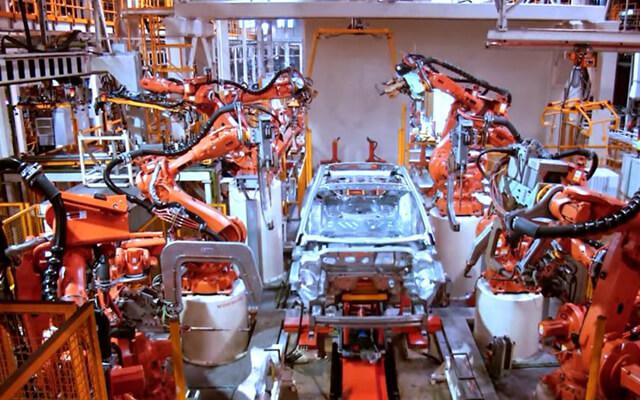
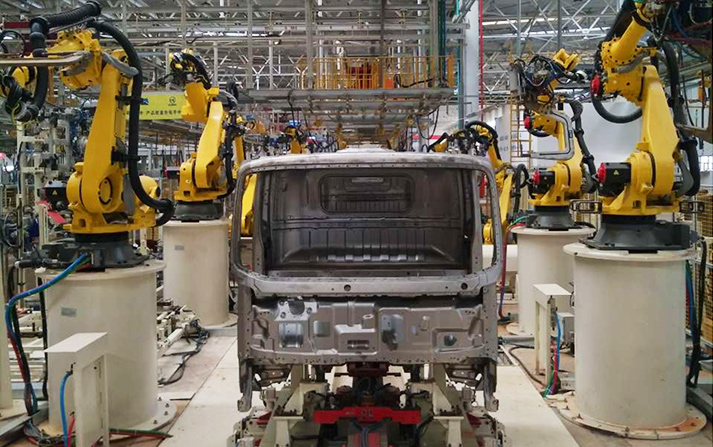
Industrial robots in car manufacturing industry handle this complexity through adaptive control. The same robotic automation in manufacturing cell that welds high-strength steel door rings can switch to aluminum welding for hoods, automatically adjusting current profile, wire feed speed, and torch angle. The robot doesn't need retooling—it needs reprogramming.
For robotic welding integration, this means systems that understand metallurgy, not just motion. The controller monitors the weld pool behavior in real-time, comparing it to thousands of stored profiles. If the puddle behavior suggests contamination or material variation, the system adjusts before the weld fails.
The Battery Challenge
Electric vehicles introduced a new problem: battery trays. These are massive aluminum structures requiring hundreds of meters of weld seam. The tolerance requirements are brutal—the battery cells must sit in precisely dimensioned pockets, and any distortion from welding causes assembly failures.
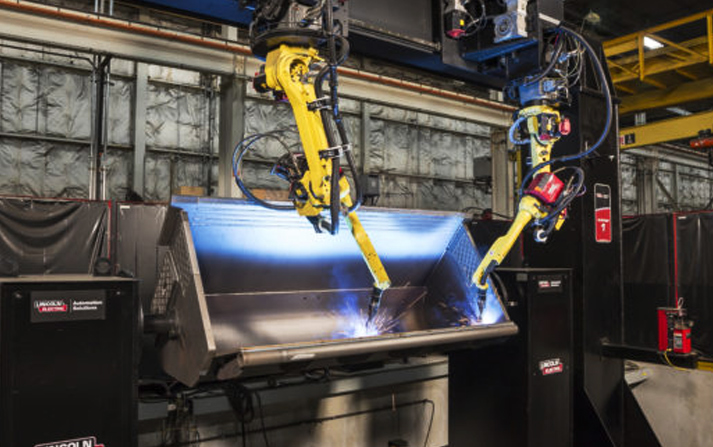
Traditional manual welding of aluminum battery trays produces inconsistent heat input, leading to distortion that scrapes expensive components. Industrial robots in car manufacturing industry solve this through synchronized multi-robot welding. Two robots weld simultaneously on opposite sides of the tray, balancing heat input to prevent warpage.
The advantages of robots in car manufacturing here aren't about labor savings. They're about physics. No human team can coordinate welding on both sides of a structure with millisecond precision. Only robotic automation in manufacturing delivers the thermal symmetry required for distortion-free aluminum fabrication.
The Invisible Welds
Some of the most critical welds on a vehicle are invisible after assembly—the ones inside closed sections, behind trim panels, under sound deadening. These welds must be perfect despite being inaccessible after the fact.
Robotic welding integration enables "reach" that human welders can't match. Long-reach robots with offset torches snake into chassis cavities, depositing welds in locations a human arm simply cannot access. The robot doesn't need to see the weld—it trusts its positional accuracy and process control to deliver quality in blind locations.
This capability directly enables modern unibody design. Without robots that weld inside closed sections, vehicles would need heavier, bulkier joint designs with external access points. The weight savings that define modern fuel efficiency? Robots made them possible.
The Data That Matters
Here's an advantages of robots in car manufacturing that doesn't appear in brochures: every robot generates data. Not just cycle counts—real process data. Current curves. Force profiles. Weld signatures. Thermal histories.
For quality engineers, this is transformative. Instead of destructive testing random samples, they analyze every weld on every vehicle. When a parameter drifts by 2%, the system flags it. When a particular weld shows unusual resistance patterns, the line stops before the next vehicle.
Robotic automation in manufacturing turns welding from a craft into a data science. The robot doesn't just make the weld—it documents the weld, creating a permanent record accessible years later if field issues emerge.
The Rework Elimination
Every automaker tracks "repair rates"—the percentage of vehicles needing manual rework after automation. High repair rates kill margins. Low repair rates define world-class operations.
The correlation is direct: facilities with advanced robotic welding integration report repair rates 60-70% lower than those relying on manual welding or basic automation. Why? Because adaptive systems catch problems at the moment they occur. A manual weld that goes cold isn't detected until inspection. A robotic weld that starts trending cold triggers immediate correction.
This isn't theoretical. A recent study of automotive body shops found that facilities using adaptive industrial robots in car manufacturing industry reduced rework labor by an average of 4.2 hours per vehicle. On a line building 300 vehicles daily, that's over 1,200 labor hours saved per day—applied to value-added work instead of fixing problems.
The Collaborative Evolution
The newest development in robotic automation in manufacturing isn't replacing humans—it's working alongside them. Collaborative robots handle the ergonomically brutal tasks: reaching into trunks, holding heavy guns, positioning awkward assemblies. The human handles the judgment calls, the visual inspection, the complex fit-up decisions.
This partnership matters because the labor pool for traditional welding is shrinking. Young workers don't want careers in smoke-filled bays doing repetitive overhead welding. They'll happily program and supervise robots. Robotic welding integration preserves institutional knowledge—the experienced welder becomes the robot supervisor, transferring decades of craft knowledge into machine programs.
Why Integration Experience Separates Success from Struggle
The advantages of robots in car manufacturing are well documented. Achieving them requires more than purchasing equipment—it requires integration expertise that understands automotive production realities.
We've been integrating industrial robots in car manufacturing industry solutions since 1994. Before EVs existed, we were solving chassis welding challenges. Before high-strength steel became standard, we were developing parameters for advanced materials. We've learned what works when production runs 24/7, when materials vary between suppliers, when operators rotate shifts.
Our robotic automation in manufacturing systems operate globally—from German luxury assembly to Chinese EV startups to American truck plants. Every installation includes on-site engineering support because we know that success isn't automatic. It's earned through attention to details: cooling water quality, electrode maintenance schedules, program optimization for each vehicle variant.
For robotic welding integration, we bring more than robots. We bring metallurgical knowledge accumulated over three decades. We bring a library of process parameters for every automotive material. We bring field service engineers who understand that stopping production costs thousands per minute, so prevention beats reaction.
The advantages of robots in car manufacturing are real. They're measurable in quality data, production throughput, and vehicle performance. But they don't appear automatically when you uncrate a robot. They appear when experienced integrators match technology to application, when engineers understand both automation and automotive requirements, when support extends beyond the warranty period.
That's what thirty years of focus looks like. Let's discuss what it could mean for your line.





 Chinese
 English
 OA
OA Current location:
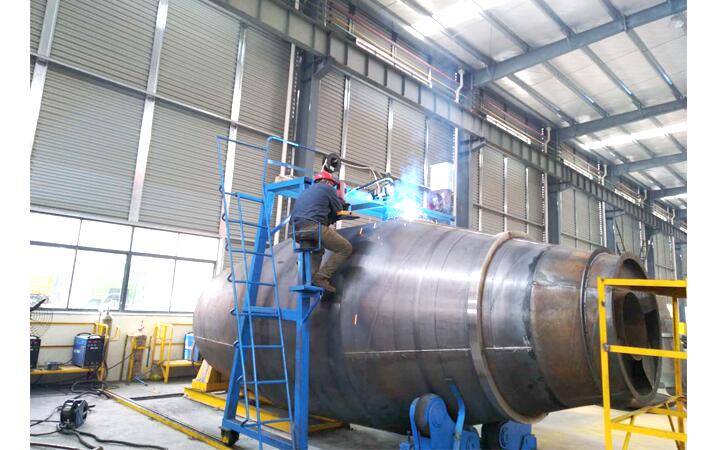 Concrete Mixer Drum Robotic Welding Solutions
 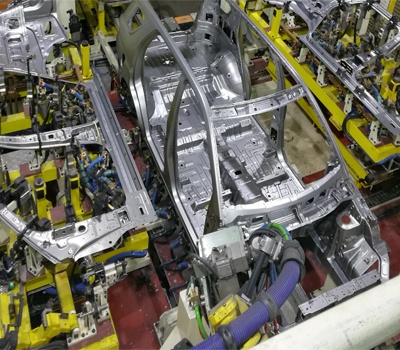 Automobile Body Production Line Welding Fixtures
 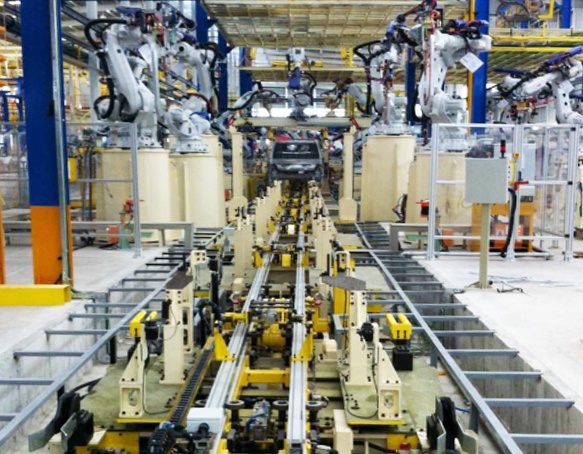 Automotive Body Welding Automated Manufacturing Solutions
 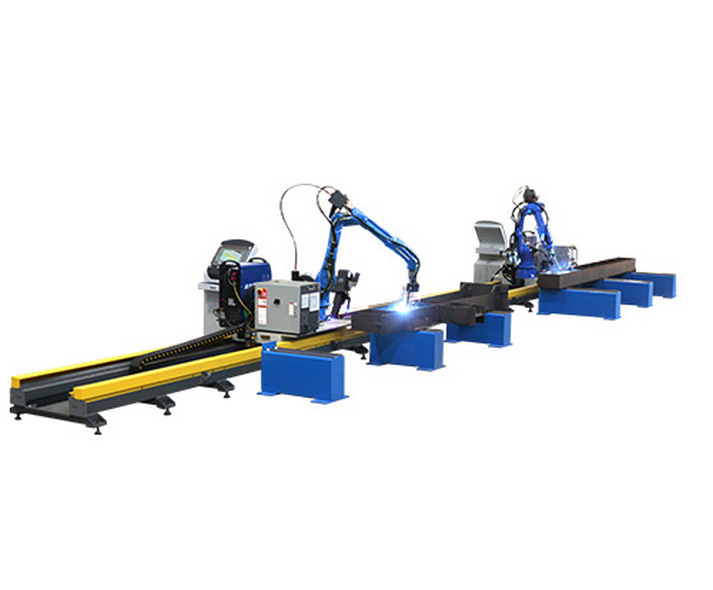 Free-Teaching Programming Welding Robot Cell For I Beam Welding
 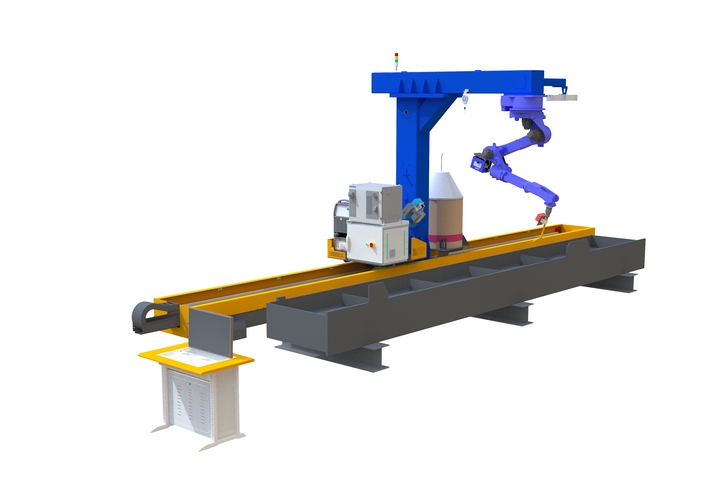 No Programming Required Robotic Welding Systems for H beam Welding Line